Monday, February 05, 2007

How to Get Off Your "Would But"
and Start Doing Something

I Would But . . .

You know you should do it (whatever green thing “it” is) and you would but, well this thing and that thing and the other thing really make it impossible for you to do right now.

Welcome to Stage One Denial.

I’ve been there; every time I stop doing some green thing for awhile, I go through it again to get started. Breaking through Stage One Denial -- the "would-buts" -- is the hardest part of doing the green thing, at least sometimes.

An Example: Bike to Work Day, Just Today.

Take, for example, the green goal of riding a bike to work. Last summer I rode nearly every day to work. It was hot, but bearable. I got to wear summer clothes to work (shorts, polo shirt) so it was a fairly comfortable bike drive.

But the fact that I had to carry a laptop to work every day changed the ride. I was nervous carrying it unpadded in a backpack. (The computer case I had weighed a great deal, so I did not want to carry it on the bike.) And the backpack made me really hot. Although I rode most days in the summer anyway, the laptop-in-the-backpack became my “would-but” for the fall semester.

In the fall semester, without a way to carry my laptop conveniently, I rode a car to work every day. I would have driven my bike, but carrying the laptop was a problem. See how this works?

Over Christmas I received a really cool Jandd pannier bag. Folds up to look like a canvas briefcase, has a padded holder for a laptop, and a built in waterproof cover(!)

This week, my laptop and I drove a bike to work every day.

How about you?

What’s your bike-riding “would-but?”

For most of us it is one of these top ten:

1. “I don’t have a bike.”
2. “I have a bike, but I haven’t ridden it in years.”
3. “I’m scared of the cars.”
4. “I have to work in dress clothes, like a suit or high heels.”
5. “I work too far away.”
6. “I have to carry stuff to work.”
7. “I have kids to pick up.”
8. “The weather is too severe.”
9. “There is nowhere to park a bike when I get there.”
10. “I have bad knees/back/balance and can’t ride.”

I have used at least seven, maybe seven and a half of these personally.

We’ll deal with these Top Ten Would-But excuses in future posts. For the moment it is enough to recognize a "would but" excuse for what it is – a temporary obstacle to be overcome. And once overcome, most of these would-buts seem terribly insubstantial.

In general, though, the top suggestions for more bike driving are to get a good used cruiser bike if you don’t own one (try www.freecycle.org for a potential free bike!), or clean yours off and get it out of the garage! Drive your bike on weekends from time to time to get back in the groove; find a “Road Cycling” course online to help you understand and deal with the driving a bike instead of a car for transportation -- versus riding a bike for fun only.


_____________________


COMING SOON: Puncturing the First Five "Would But" Excuses . . . .

Thursday, February 01, 2007

IDEA: Green Your Brain!


Going green is all the rage, but many still see the process as all sacrifice and conservation -- when nothing could be further from the truth.

What is wanted is a simple but complete change of mindset that allows one to make green choices without particular sacrifice, and as second nature.

The culture of waste and despoliation of the planet has been in place a long time, however, and such a fundamental change can be frightening, even daunting.

Even the mental change to so-called "conservation" can be daunting, not the least because it carries images of sacrifice and deprivation. It (wrongly) foreshadows the end of America as the land of endless everything.

Worse, mere conservation is, in fact, an inadequate response to a growing population made up of folks who each also want a growing piece of the pie.

Again, what is needed is a change of mind, as much as a change of habit.

One Example

Consider: At my house, according to the electric company, we've managed to conserve 90% (yes, ninety percent) on our electric bill last year. Even with the hottest summer on record this year and the AC running 24/7, we are on track this year to "save" 50% of the electricity we would have used in the past.

But we've made NO sacrifices. Really.
We have made a green choice that was so painless, and seems like such a no-brainer from our changed mindset, that we don't understand why most homeowners, builders and city governments haven't made the choice too.

Remember: No sacrifices.
We have only one compact fluorescent light bulb on in the house, have four TVs, five computers, and a microwave, central air and heat that runs non-stop. We have kids who leave the lights on. Our change costs us only about $40 per month, and has reduced our electric bill by 90 percent.

We have solar cells.

We didn't want the approximately 70% coal-fired electricity that our local utility offers. It didn't make sense when there was an affordable option.

Forty bucks a month -- with price rises, ever, and no coal.

And because right now we can afford to do so, we splurged and pay a tiny premium to the electric utility for wind and small hydro for our remaining electricity.

No Pain, All Gain

Although Pasadena gets nearly 70% of its electricity from coal, ours is 100% renewable, clean and green. No sacrifice. No actual conservation. No big deal.


And it is no big deal precisely because we have come about half-way 'round to changing our mindset.
Awareness of one's impact; a commitment to minimizing the impact; and, in these early decades of serious environmental change, a commitment to push past "business as usual" mindsets to get the green thing, or do the green thing wherever possible.

Green. It's all in your head, really.


Saturday, January 20, 2007

Five Percenters, Changing the World

The premise of this blog is that if one makes a few, easy green changes and choices, the few easy things will add up to a whole lot more than the parts.

Turns out, at least a few folks have invented a term for it, calling it the "Five Percent" approach.

Blogger Noreen's Five Percent (which I stumbled across four or five links down into a read of some favorite eco-blogs) uses this as her premise:


Imagine if every single person on the planet invested 5% of their
energy in working toward a better self and a better world. I decided to try it,
since it's something I can do not just once, but every single day. These are the
stories of the little efforts I'm making while living my ordinary life. I'd love
to meet you along the way!


She's been offline since August, but her blog has some great back-posts, and a host of neat "impact" links, which are worth a look-see.


Another way to look at the 5% is what I call the "stone soup" effect. If you don't know the story of Stone Soup, you can read it here. But in a nutshell, but doing things one little bit at a time, moving reluctant change slowly and stepwise, it is possible to create something larger and more magnificent than anyone thought possible.


Easy Green is a reference of some of the things one person can do to do one's own 5%.


Sunday, December 31, 2006

QUICK GREEN: Change Your City!

It turns out, maybe the easiest way to be green is to change your city's culture so that the city government helps you do it.

At the city level, it is shockingly easy to have a voice, and an impact. It may not seem that way to someone not currently involved in local city politics or policies, but that is usually a misimpression.

One of the easiest methods is to find a city web page and discover who is in charge of issues that are important to you, and email away. In addition to department heads, Mayors, City Council members, and City Managers should all be on your one-person email campaign list.

Some things to consider emailing about:

1. Walkable, livable cities (requires special attention at the Planning and Transportation departments for creating a human scale environment);


2. Green building requirements, such as LEED certification or mandatory solar, for new construction;

3. Municipal Utility policies: Renewables mix, solar incentives, more.

4. City operational concerns, ranging from efficient use of natural resources to reducing emissions from city equipment like buses or skiploaders.


In the City of Pasadena, there are also a number of commissions -- staffed by citizen volunteers, not politicians -- to which you can take your ideas and concerns.

These quasi-insiders can often translate your issue into terms that the local government can work with effectively. They can also become a champion of your issue, and came at the issue from the inside, at the same time you work on the outside.

Some recent examples: The City of Pasadena recently became signatory to a UN document setting goals for combating global warming; and after citizen input the City dropped efforts to extend coal generation contracts for the local electric utility. ("No new coal" is now the official city policy(!).)

Bring your city around on key issues, and help yourself -- and thousands of your neighbors -- to an easy, Green future!

Monday, September 18, 2006

Coming to Your City: A Fix for Global Warming


I am sitting, right now as I type and post this, in the September 18 meeting of the City of Pasadena City Council. Currently an expert from Caltech is describing why cities need to be mindful of greenhouse gases, followed by an expert from Caltech's JPL. Why?

The city is about to adopt a simple global warming checklist, and create its own Environmental Commission to spearhead efforts to reduce citywide environmental impact.

Go to the City Web Page and view the video and check the agenda items. More detail soon.

Saturday, May 06, 2006

GREEN IDEA: It's Time!

ATTENTION All Greenies! If you live in Southern California, its time!

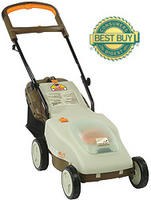
For the next month you can dump your old gas lawnmower, and get yourself a $400 cordless electric mower for just $100.

Details in a moment.

Meanwhile you may remember that mowing your lawn once puts out more pollution than driving your car for a week. (See, Easy Green: Kill Your Lawnmower, 10/27/05) While electric lawnmowers are good -- for lots of reasons electricity pollutes less than gasoline -- the cord is a hassle.

Starting May 13 the AQMD is once again selling cordless electric mowers for $100, plus the trade in of your old gas mower.

The event is schedule is as follows, and there are residency requirements, so check the AQMD website at www.aqmd.gov or call 1-888-425-6247 to make a reservation. (Yes, reservations are required! They sell out every year!)

(To verify the retail price, click the mower picture to the left for the company website, then go back to the AQMD.)

program Schedule:

May 13, 2006 Riverside
May 20, 2006 Van Nuys
June 3, 2006 S. Pasadena
June 10, 2006 Santa Ana
June 17, 2006 Inglewood

If you still haven't replanted your lawn in xeriscape or something edible (we haven't, but we have Big Plans) at least don't dirty the air while mowing that pretend-prairie we are all so fond of, hmmmm. Thanks. See, it is easy being green. . .

Tuesday, March 28, 2006

IDEA: Greening Your Schools

One way to effect the environment is to help green your local schools. This can take the form of urging greener policies with respect to the physical plant and operations, or can affect the curriculum both directly and indirectly. There are many ways to do this, but there are three over arching themes to keep in mind. For Part I, then, an overview of key considerations:

All Politics Are Local

Trying to get a district-wide policy change in any district is about the toughest way to make a change in schools. The larger the district or the more "under attack" district administrators feel no matter the size, the harder it is to get changes made.

In the end, however, each classroom teacher has pretty high level of professional discretion about classroom procedures and how to teach the curriculum. They also work together and share ideas more than people realize. So an easy place to start greening your school might be your own child's classroom.

If you help your child's classroom with a recycling project, for example, with the procedes used for an Earth Day Celebration in April, the next year all the other classrooms in that grade are likely to want to play too. As your child moves along, you have a new chance each year to help a fresh set of teachers with some green idea. A recycling program in a classroom can tie into any number of other activities, and is likely to have a lasting effect on these future leaders and voters.

Meanwhile, principals can affect policies and practices at their schools -- and successful programs often get copied and carried to other schools much the way as with classroom teachers.

If you get a principal excited about an idea for greening your school, very often it can be implemented at that level. The same sort of "we want that too" effect happens among principals the way it does with classroom teachers, so one school's new green policy will often spread. Occasionally a really good idea can jump from one school to an entire district, but the process is usually slower.


Tie it to the Budget

Many Green practices have unintended or unnoticed benefits for school budgets, and school budgets are always tight. So an administrative change that can reduce costs while being green is more likely to be noticed and implemented.

One example: recycling may be seen as creating extra work for custodians who have two kinds of trash to empty in hundreds of rooms and as being hard to "enforce." But recycling can save money by reducing the costs for ordinary trash. Moreover, many firms will provide a recycle "roll off" bin that they will pick up and process for the school for free.

In Southern California there is even an organization that will provide the recycle bins, empty them, haul the products and then write the school a check for the value of the recyclables.

Tie It To the Curriculum


Teachers are forever looking for ways to provide hands on, concrete experiences that reinforce classroom lessons. That same simple recycling program easily has ties into the science standards at the k-8 level, often directly related to resource use. Or it could be part of an extended math lesson on statistics and graphing. Or it could be part of an English unit on persuasive writing as students advocate for -- or against -- applying the program to the whole school. And when you can provide a program that happens to integrate several disciplines, you have found educational nirvana.

Coming Soon: Specific Programs to Ask for and Implement

Saturday, February 25, 2006

QUICK GREEN: Finding Green Stuff

Many in the greenie and Green blogospheres already know this, but for my not-so-green-yet friends and visitors, let me point out that there are more than a few cool sites that help you find green alternatives to every day purchases and lifestyle choices.

Alternatives to turn your scorched-earth "brown" lifestyle a little more green.

Lisa, of the LA Greens,the Green Party local for that city, introduced me to the New American Dream site: Although a bit earnest in its exhortations, the site serves up equal parts of consumer help finding green goods and services with non-preachyreminders to "buy wisely locally," and easy-to-use tools to help you help others see the (green) light.

The subtitle of the site, "Conscious Consumer," says it all: In the end living green(er) is about being aware of the products you buy and the choices you make, and trying to make the good choices where possible.

Also helpful, and a darn fun read too, is the Treehugger website. All products green and greener show up here, both currently available and those as yet a futuristic concept. Reminds me of the old "Popular Science" magizine, only for greenies.

There are probably -- no certainly -- other great sites out there. Many are quite product specific, or really local, or both. For local (Greater LA) area farmer's markets (a fun way to buy green) try Farmer Net.

Or check out the M.O.O. site (Mothers Of Organic) which actually has some very good essays on that topic in general. It is underwritten by Organic Valley, a large organic farming co-operative, but does not seem to suffer for its origin as a promotional site. (Organic milk and milk products, and organic meat, being Organic Valley's chief products.)

The QUICK GREEN take-away idea then is that in the age of technology there are more than a few resources to help you quickly locate a green or greener option anytime you want or need to acquire something! And if what you need is absolutely nothing, then, of course there is always www.nothing.com

Monday, February 20, 2006

IDEA: Less Poison for Breakfast


If you want to eat green, I will suggest chocolate chip cookies and Pop Tarts.

It may be hard to believe, but at our local Trader Joe's they stock organic chocolate chip cookies and Pop-tart-like toaster pastries. Really. And at least 20 different types of organic breakfast cereal, some of which are quite familiar -- like raisin bran -- and even what in another brand and era were called "Super Sugar Crisps."

We are all pretty clear that none of this food is particularly good for you. But it's organic!

This is actually an important moment, when even junk food is at least organic. It means that organic has transcended the rarefied bins of the health-food store. It means that organic food (and especially fruits and vegetables) are available at any major Supermarket (at least in California).

That Trader Joe's now stocks a staggering array of organic food, including the aforementioned cookies, toaster pastries and dry cereal.


(Actually Trader Joe's is itself a green practice. Not only do all the TJ brands not contain artificial preservatives, they are all non-GMO even if the product is *not* organic. It's hard to go "brown" at a TJ store these days.)

But remember, organic means, generally, that all the ingredients were grown without chemical and petroleum-based artificial pesticides or fertilizers. Which means no poison residue for you to eat, and no spoliation of the earth to produce your food. Good for you, good for the environment.
Organic foods used to be shockingly healthy too. If a loaf of bread was organic, it was also probably a 32-grain, sprouted-health wonder, made by hand by chanting monks in a Zen monastery. But the one-time association between organic and a spartan healthy-ness is no more.

So if it is junk food, how can it help if it is organic junk food?

1. No Poison on the Food.

Many folks prefer not to have to scrub toxic chemical residues off of their food. If they really do all come off.

Given the choice of carefully washing then eating an apple that was repeatedly bathed in a petroleum-based, carcinogenic, mutagenic nuerotoxin while being grown on the one hand or eating one that was not so bathed , I think I'll take the clean apple, thank you. It may be all in my head, but if its all the same to you, I've noticed that the famous last words "It's perfectly harmless" often are just that. Last words.

2. No Poison on the People

Although not strictly a green (small g) issues, workers that pick the food you eat, and nearby residents, get a good dose of the herbicides and pesticides intended for the plants. This is not good. Organic avoids this part of the farm problem.

3. No Poison on the Earth.

Organics use sustainably, biologically sound farming principals. No poison residue in the field, or poison run off in waterways, or leaching into other water supplies. No accidental over-kill of beneficial insects. No soil killing residues from chemical fertilizers. Not only do you not have to eat the poison residue, neither does the rest of the environment.

4. Low on Oil

We've mention this: Organics do not use petroleum based chemical fertilizers, herbicides and pesticides. The key words here are "petroleum based." Agriculture competes for one heck of a lot of its "modern" tools with your automobile and the plastics industry. The fewer petrochemicals used in agriculture, the less demand for oil and price competition.

5. No Food production degradation.

Organics use the natural process that work well together to produce optimal food product -- the most that can responsibly be taken from the land without causing large scale damage, and without producing crops that are largely tasteless. Organic processed foods also avoid the heaviest processing and artificial ingredients. This is at least three sub-points on its own, but we're trying to keep things easy.

In that respect, although there are a half-dozen additional reasons to eat as much organic as possible, trying to keep it all straight is a job for a dedicated tree-hugger. Around the Easy Green household we have simply started referring to organic food as "clean food" and the rest as "poison food" or, in polite company, "unclean food." Simplistic, but it makes the choice easy.

Oh, and it does not mean that one must be a Vegetarian; there are organic meats, poultry, eggs, milk, cheese and more for the carnivore (or at least omnivore) who prefers not to eat poison food. (See how appealing that makes organic feel? Grin.)

More to the Story

There are other elements that make your food more green, and better for you. Worry about those next week. As ever, an *easy* first step is intended to lead to more. Some of the other considerations:

Fresh, locally grown, in season food. Some folks believe that the petrochemicals burned transporting an organic apple from far away offsets the organic elements. That is perhaps true, but starting with organic is an easy way to become aware of your eating habits. If you can find good organic local food, eat it! Frankly, given the choice between eating a chemically-bathed but local apple or an organic one from far away, I'll go with the organic one. The always thoughtful Ardent Eden concludes other wise. You might too. (She has a great take on GMO food too, which you really ought to read here.)

For me, organic is the big growth area in food right now, and while I love my local farmers, I do not like their local use of poisons and poisonous fertilizer. We do go to the Farmer's market, but go out of our way to go to the one that has organic local products over the more convenient one.

Minimally Processed. Pop-tarts and Ragu are not health food. You knew that. Whole grans and fresh fruit and vegetables are health food. You knew that too. Organic doesn't change the disadvantages of over-processed over refined foods. On the other hand, I'll rather have clean junk food than junk food with poison too. In the end, organic is as much about encouraging sustainable farming practices and not poisoning yourself outright.

AGAIN, The Easy Green Part:

Look for and choose the organic label. We'll all be better off for it!


Tuesday, February 07, 2006

IDEA: Less Imported Oil? Eat Organic (Pt. I)

You heard the President: "America is addicted to oil, which is often imported from unstable parts of the world," he said it, really he did, in the State of the Union.

Bu-Oh-My-Goodness; Texas Oilman Bush says we use too much oil? oh dear oh dear . . . how much worse must it be than we thought? Well here's a thought about how to use less oil: Eat Organic.

That's right, buy all that weird "organic" and "certified organic" food that has been showing up in the regular markets, not just the specialty stores. Why? Ordinary food uses tons upon tons of petroleum products for bug poisons, weed poisons and fertilizer. Organic does not. Cutting out the use of petroleum based farm products would go a long way to weening us from foreign oil.

Organic food is good in many other ways, but this is an easy one. Turns out all us treehuggers were actually just being patriotic all along! (More about the other benefits next post.)


Click for More

Monday, January 09, 2006

IDEA: Green? My Choices Don't Matter, I'm Just One Person, Right?

What's the point of all this fussing over green living? Does it really matter which coffee filter I use or where I get my electricity?

Yes it does. And there are at least three major reasons why this is true.

But note first, these are not reasons to be a greenie in the first instance; you already know some of those, from global warming to poisoning yourself with non-organic food. Rather, here are three basic reasons why making small personal changes yourself really does make a difference:

1. Many Small Changes Add Up

Small changes get easier, and easier, and build up within your life; one day you wake up and realize you have made a lot of changes in your life, and have reduced your personal threat to the survival of your family and others by a great deal.

This "slippery green slope" was the basic premise for this blog, as one little green thing after another lead to a significantly healthier, more sustainable lifestyle -- painlessly.

2. Many Small Changes Add Up, II

Many individuals making the same small change can add up to a larger cultural change. Folks that pushed for organic foods in the 70s probably never foresaw the day of FDA Organic Certification or that Organic Pop-Tarts (ok, generic "Toaster Pastries") would actually exist.

There is a large enough vocal demand for organic -- and what I call casual demand, where people will buy it if it is available and not much more expensive than the other options but won't go out of their way for it -- that stores like Ralph's have whole Organic sections and Trader Joe's has an organic choice (or several) in almost every category.

Organic baby food, which used to be twice or three times the cost of old-style baby food (when it finally became available) is now 2 cents per jar more at Target than the old style from poison-covered food.

3. Cultural Change Can Effect Political Change

Which can, in-turn, effect more cultural change. By caring enough to use reusable shopping bags, or giving your car the weekend off, and telling people about it, we begin to create a cultural phenom. This, in turn, creates political pressure to be more green in how let the government regulate our society, which in turn can create broader understanding and appeal of how to live a more sustainable lifestyle. Not everyone will "get" it; not all of us will make every change we could, but as the social and political culture shift it will get easier and easier to be green.

In the final analysis, then, every easy green thing you do does make a significant difference. You may only see it in your own life at first, but individual choices do affect the rest of the world.

Thursday, December 29, 2005

QUICK GREEN: Bicycle Valet at the Rose Parade

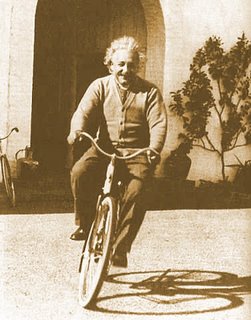
Albert Einstein - not Humberto - Biking in Pasadena: Click the Pic for More Info
Pedal Power Meets Petal Power

Humberto Cortes had long dreamed of hosting secure bike parking at major events and venues in southern California to help us move into easier non-auto mobility. This year he made his dream come true, in a small way, with the first ever Bike Valet parking at the Tournament of Roses Parade Post Parade Viewing area.

With the help of Councilmember Steve Haderlein, (and a little nudge by yours truly on TAC), the Tournament of Roses will allow Humberto to offer a secure Bicycle Valet service during the post parade float viewing; although there is a suggested donation, no one will be turned away for lack of funds.

If you are even thinking about going to the post parade events, consider using the Bike Valet. If it is well received it can be expanded and will return next year! A reminder that the Metro Gold Line goes to within about a mile and a half of the valet parking, and the parade, so bike access is available from everywhere in SoCal. In any case, details are at the bottom of this T of R page.

Sunday, December 18, 2005

IDEA: Politics Matters

It's time.

You've been doing a lot of little green things for a while now, but lately you've have begun to wonder if its time to do something bigger.

Easy, but bigger.

There is a one-time change you can make that has the potential to affect how politicians from both parties deal with green issues. And its super simple to do.

I will not suggest that deciding to make this change is easy. The physical acts required to do this are nothing at all for most people, but getting to the point where we can act may still require overcoming years of investment in cherished stereotypes and self-image.

Here it is: Change your voter registration.

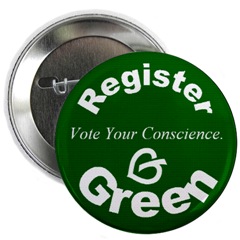
It doesn't matter if you vote Republican, Democrat, Decline to State, or something else, I want to gently urge you to register Green.

The act itself is simple: In California a couple of clicks, and in a few weeks a form arrives in the mail. If you have changed your mind by then, don't sign the form. Otherwise, sign it and mail it in and you are re-registered Green.

Simple. Easy. Green.

Why register Green? The California Green Party website says it best:


  • Registering Green is a way of 'voting' for the kind of world you want. Join a party which stands for your values, instead of one that is the 'lesser of evils' .
  • Registering Green makes a clear and effective political statement. The more people who register Green, the stronger the Green Party will be, and the more all parties will take green issues and green voters seriously.
  • Registering Green does not limit your voting options in the general election. Since you can vote for any candidate, choosing a party is really about what you believe in.

For all that, there are often decades of personal and family identification with a political party which may make it very hard to step away from your current registration. And of course there is the often strong sense of futility about registering in a third party -- one that is not currently one of the big winners in a national election.

But the interesting thing about registration, as noted, it does not affect who you can vote for: I Registered with a major party when I turned 18, but I pretty much never voted for any of that party's candidates based on simple party affiliation after that first election. It took 26 years for me to realize that my registration inertia gave comfort and support to candidates I would never support.

When I looked at the opposition party, I remembered why I had not bothered to switch previously. Although some of their candidates had personally impressed me, and I had voted for them enthusiastically, when I looked at the party platform I was hard pressed to see any real or effective effort to tackle issues that were important to me. Especially greenie issues.

Then I looked at the 10 Key Values of the the Green Party, and realized that they aptly described, in direct language and without the usual politician-speak, many of the things that I thought needed to be done.

The more I looked at the 10 Key Values, the more I realized the Green Party platform most perfectly encapsulated the hopeful-but-worried-and-frustrated view of politics I had begun to have.

So I re-registered as a Green.

Now I realized even as I registered that I was not interested in voting for some of the Green candidates, based on their personal qualifications or approach to governing. Others I have worked to elect and voted for when it seemed right.

But I feel that way about Democrat and Republican candidates too.

And especially in non-partisan local races I have been known to vote all over the unspoken party line to put a good candidate in office. But by leaving my registration in the back pocket of one major party or another, I was undercutting my own position as an advocate for sane, sustainable, human-centered, green governmental policies.

In California, many voters register without a party, as Decline to State. They often can't vote in a primary other than for their registered party, but they can vote for anyone and everything else -- every blessed proposition and every office.

But Decline to State suggests either an overwhelming interest in personal privacy or a non-specific disillusion with the two major parties, upon which no one can easily act. It does not say "I support stronger attention to personal responsibility and a greener, sustainable way of living." And that, I realized, was something the mainstream parties needed to hear.

Register Green -- Vote as You Will

The act of registration is a small step that has more import even than voting. By registering with one of the two major parties one gives the impression that a world that is a little more left or a little more right is okay; by registering Green you come down strongly on the side of diversity, personal freedom and a sustainable future, not left or right. Conservatives for conservation; progressives for progress; as Greens (capital G) both groups share the vision.

Consider it.

Register Green; vote your conscience.


Wednesday, December 14, 2005

QUICK GREEN: Starving the Electricity Gluttons In Your Home

If you don't have 100% Green Power or your own solar cells for electricity, there are some surprising electricity eaters in your home that can really add up to a lot of energy usage and increasing your negative impact on the planet. Toning down use of these appliances might save you some cash, and reduce your "brown" footprint.

Everybody knows about Air Conditioning and that power drain -- but did you realize that there are some other major power gluttons lurking?

(Some of this discussion might not apply to a house with 100% Green Power -- if you have solar cells running your electric dryer, then you avoid the fossil fuels entirely. Huzzah!)

HOT HOT HOT: Coffee Maker / Water Heater / Dryer

An electric coffee maker uses a tremendous amount of electricity. The heating element to heat the water draws heavily, but so does the electric hotplate built into the thing, which may run (even in an "auto off" coffeemaker) for several hours.

Our pretty plain Mr. Coffee coffee maker is rated at 900 watts. If it runs for 2 hours, that's 1,800 watt hours, or 1.8 kWh (kilowatt hour) of power. Since the whole house uses between 12-14 kWh in a 24 hour period, you can see how that adds up. Thirty days of two hours of coffee maker use per day, on average, adds up to 54 kWh, enough electricity to run our entire home for four days!

The high-juice draw is true of any heating function performed by electricity. Stove, space heater, water heater, clothes dryer, hair dryer, oven -- even microwave ovens draw tremendous wattage for the time they are in use.

In addition, electrical heat is terribly inefficient in terms of resources these days. Once upon a time, the "Gold Medallion All Electric Home" was touted as the latest and greatest, but that was before we realized we needed to get the most efficiency out of every scrap of fossil fuel.

NOT NOT NOT: Thermal Inefficiency

Fire is still more thermally efficient for heating than overloading an electrical wire to make it glow to produce heat. In addition, a gas dryer and water heater use the energy in the gas directly to make heat, electrical devices use gas at a power plant to make heat, which is then used to generate electricity, which is then used to make heat again -- each step in the process loses efficiency and wastes the available energy.

So, if you can afford it, and already have 100% Green Power or are on Solar or Wind at home, electricity is a fine choice. But if, like most people, you can't afford to waste energy due to the cost, or don't want to leave a dead brown planet for your children, then it is an Easy Green thing to do to monitor, limit, and maybe even eliminate some of these electrical uses in your home.

Now where did I put that non-electric drip coffee maker?

Monday, December 05, 2005

NEWS: Mixed Recycling After the Truck Comes

Here is a great LA Times article that describes how a "clean MRF" is processed; you may recall from the Great Recycle Treatise that a clean MRF has the advantage of bringing recycling issues -- and ultimately waste creation issues -- to mind daily.

And don't forget: the simple act of putting recycle trash cans out in your house -- like the $6 basic Rubbermaid recycle bin above -- can greatly increase the amount of stuff that goes into your own recycling. Anywhere you have a "trash" can should also have a recycle bin.

Saturday, November 26, 2005

IDEA: Give Stuff Away, Get Free Stuff You Need, Save the Planet!

Although Buy Nothing Day is a noble effort to remind ourselves that rampant consumerism is not a greenie virtue, sometimes a person just needs stuff. Here's one green way to acquire stuff that you might have bought new -- and its all free. Check out www.freecycle.org .

Similarly, if you have stuff you don't want, this is a great way to get it off your hands without sending it to a landfill. Sometimes folks will even pick up items that would cost a great deal to have hauled off!

Freecycle is a community of local members who list things they no longer want or need. If someone on the list has a use for the item, a pickup is arranged. Over the last six months I have seen everything from baby clothes to hot tubs, galvanized iron poles to firewood, lawnmowers and lawn chairs, rose bushes and expensive bed frames all in the Freecycle(tm) network.

Freecycle (tm) puts the REUSE component of Reduce, Reuse, and Recycle into play!

From the gifter's perspective its a great way to avoid throwing away perfectly good items, and to get someone to take the item off your hands.

The main freecycle web page, www.freecycle.org, can put you in touch with any one of over 3,200 local local freecycle lists world wide. The lists are hosted on Yahoogroups, and other than joining yahoogroups for free, there is no cost or membership requirement.

I happen to be the lead moderator of the San Gabriel Valley Freecycle list, about 900 members strong, covering from about Pasadena west to about Glendora, as far south as Whittier and El Monte. LAFreecycle has some 7,000 members, and covers a huge segment of the city of Los Angeles. There are local Freecycle lists for Burbank/Glendale, South Pasadena (very small, but growing) and more.

In addition to keeping tons of trash out of landfills, Freecycle participation tends to build community; the no-strings gifting of useful items can be quite rewarding, and one often establishes neighbor to neighbor relationships.

The rules consist of three major caveats:

1. Keep it Free & Legal for all ages. No money or trading is allowed, ever. The point is to keep it free. If you want to buy or sell something online, there is eBay and craigslist. Likewise, things with age restrictions (alcohol, firearms, etc) are not appropriate, nor would, say, samples of prescription drugs be allowed. Other than that, the only universal rule is have fun and be nice.

2. No politics.

3. No spam.

Different regional groups may have the occaisional different local rule. For example, SGVFreecycle allows pet OFFERS, but not pets WANTED; pet wanteds are referred to pet rescue websites. Some sites have no restrictions on pets, some do not allow pet posts at all. Most Freecycle groups ask that you begin participation by posting an OFFER, but stringent adherence varies. Be sure to read the "Welcome" file from any group you join.

Also, many groups do not allow wanteds for things that will be resold. SGV Freecycle allows them, but requires the intent to resell be stated up front, in the wanted post. Since the giver gets to choose, often from several people, they do not have to give to resellers if they choose not too.

Started by Deron Beal in Arizona, the Freecycle(tm) network has mushroomed to nearly 1.8 Million members worldwide!

Still not sure how it all works? Click the picture at left for an amusing little animation explaining the whole thing. It's free too!

With the winter holidays now nearly upon us, and the inevitable "winter cleaning" just before and just after all that gift giving and new year's resolutioning, this would be a great time to join your local group and help save resources.

Wednesday, November 16, 2005

QUICK GREEN: Buy Nothing and Save!

Here's a quick greenie idea: Buy Nothing.

In the United States, the Friday after Thanksgiving is a traditional shopping orgy -- and so it has been adopted by a group of folks calling themselves "culture jammers" as Buy Nothing Day.

This year, Buy Nothing Day is November 25, and is recognized internationally.

Now there is always a lot of talk about buying green -- green processes, green ingredients -- but it is always talk of buying. Consuming green is far better than the alternative. But in the end it is consuming, using resources. Remember the old saying "reduce, reuse, recycle?" This is the "reduce" part of the equation. Sort of a "conservation of shopping."

We Americans, even greenie Americans, use more resources than almost anybody. For an example, try one of several ecological footprint websites:

Best Foot Forward
and More . These footprinters are aproximations, but point out the consumption issue.

In the end then, on Thursday, November 25 practice one day of lowered consumption. Just one day. You can do that, right?


Buy Nothing Day

Thursday, November 10, 2005

QUICK GREEN: Ikea Has Worms!

Ikea has worms.

Earthworms, that is, and not for sale either. One of the greenest stores around, especially for a mainstream retailer, Ikea is participating in a vermicompost (worm composting) pilot project.

Seems those Ikea restaurants produce a lot of food waste, which worms love to eat and turn into a high quality fertilizer. The program is pretty amazing, with two giant composting bins on truck beds set up to collect and process Ikea food wastes! Go Ikea!

You can set up your own worm box for food waste, but that is a tale for another day. Today I want to mention that not only is Ikea low-priced, they are committed to the most sustainable green business model I have seen in a while, and it’s a whole lot less terrible to buy Ikea products than home furnishings made elsewhere.

While checking out the Worms On Wheels project, I discovered that the company claims most stores recycle 70% of their waste stream, with an official goal of 90%! The worm program is touted as helping the chain get those last 30 percentage points.

Ikea scores high marks on other greenie fronts, some of which are collected here:

  1. Packing material is minimized, and nearly 100% recyclable. Cardboard and marked and numbered plastics cradle that new Snortblast bookshelf. (Personal Observation.)

  2. Flat-packed products ship more efficiently, reducing fuels, etc. associated with shipping. (Ikea Website Claim)

  3. Ikea was an early seller to move away from toxic flame-retardants, often used in children’s clothes by others, but useful in many fabric items. (Environment California Website)

  4. Similarly, Ikea has stopped using certain plastics – such as PVC – which many believe is also quite toxic. (Greenpeace Website)
  5. Many Ikea products are made from wood, a sustainable and environmentally friendly resource if managed properly. Ikea does not buy wood from ""intact natural forests" unless certified as sustainably managed. (Ikea Website)
This is not an endorsement of their products, per se – and for those who want to to get away from inexpensive Swedish design, this may not be welcome news. But certainly there is less environmental damage – thus green guilt, if you have gotten to the that stage -- inflicted by an Ikea product than but most other home furnishing products.

Coming Soon:

How You Can Get Worms Too!

Tuesday, November 08, 2005

Vote Green: No on Prop. 80 to REALLY Support Renewable Electricity!

If you want to VOTE green this election, the only proposition that falls in that category is Prop 80 -- and the GREEN VOTE is a NO VOTE on 80.

Oh, it started out with a good idea. But Prop 80 does really bad things , even as it tries to do some good. As a result, Prop. 80 undermines green power sources!

Prop 80 will:

-- Removes your right to buy electricity from someone other than the local utility. If you want all green power -- or all nuclear for that matter -- you can't get it.

-- The 20% renewable requirement is already the law, it just moves it up from 2017 to 2010. Most utilities were going to do it by 2010 easily anyway. Turns out, in SD for example, renewable is CHEAPER!!

-- Makes it harder for individuals to put solar on their own homes. My house runs between 90-110% off solar. Under Prop. 80 that would not have been easily possible.

Again, certain re-regulation is not a bad thing, but this is a flawed proposition that sets back sustainable sourcing for electricity, so, again a GREEN VOTE is NO ON 80.

Thursday, November 03, 2005

Red Tag Your Car, Part III: Getting to "Well, Ok, Maybe"

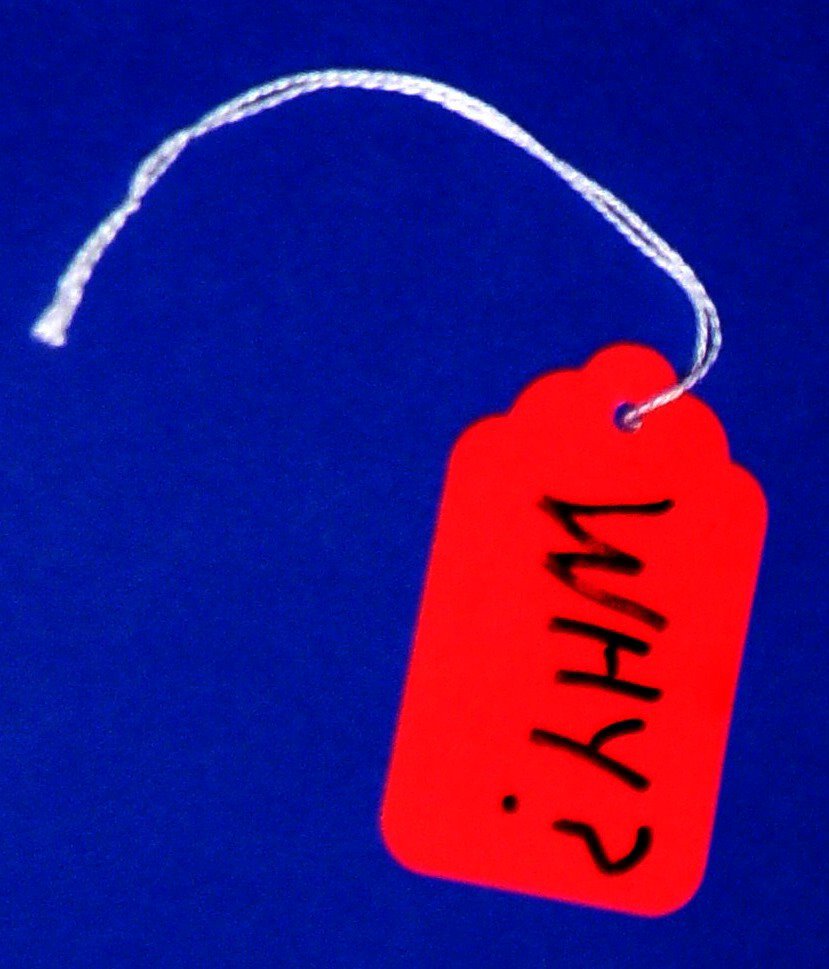
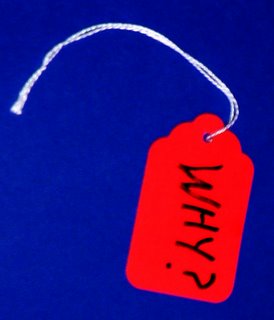
In Red Tag, Part I we realized that most of us are car addicts, that we ride in our cars without thinking about it, and that this is not a green habit. We learned a simple technique to create awareness of our mobility choices by “red tagging” our car keys. The tag reads “How?” and “Why?” so that we will ask ourselves the hard questions – and make a conscious decision: “How will I get there?” and “Why do I have to ride a car?” In Red Tag, Part II, we examined the basis for the excuses we offer ourselves -- both real and trumped up. Today, some workarounds for some of the false excuses we offer ourselves.

T he whole point of the Red Tag process is to create awareness. The Red Tag does not offer non-auto alternatives; it does not stop one from riding a car. It can create awareness, and awareness is the first step. If you are any kind of decent human being, the awareness should result, ultimately, in some action. Or maybe just a little guilt.

The problem is, guilt leads to excuses, excuses lead to rationalizations, which in turn relieve the guilt and any interest in that pesky awareness -- and thus we have simply dug the car-riding rut deeper.

Today I offer a few of the rationalizations I have tried, or seen tried, and some workarounds.

More Ways to Say "No" than "Yes" to the Car

At the outset one needs to realize that there are many ways to avoid the car in any given situation. Like the Pasadena Walks! slogan says "Walk Bike Ride" are almost always competing alternatives. So if transit turns your 30 minute commute into a 90 minute nightmare, consider driving a bike, or bike mixed with a different transit mode. The key is not to give up on a mode if it fails for a particular trip, and not to ditch all non-auto choices if one doesn't work the first time.

That reminder having been served, here are some of the most common rationalizations I have encountered in my own brain and some ways I have found to over come them. They may work for you, or they may not -- but, again, if we are willing to admit that we are car-addicted, and think about alternative, we are well on the way to recovery.

That's Too Far To Walk (Or Bike):

Remember way back in Part I, when I asked people if they would drive 1250 feet to go to the store and everyone vehemently said "no!" When I asked if they had to drive a car for trip of 2500 feet? "Nooooo!" But when I ask the same group if they would walk a half mile to the store, they will often say that that its is too far? Remember?

Well, remember too that a half mile is only about 2500 feet.

As car riders, our concept of distance is often skewed. Frequent car driver's often have trouble estimating short distances, especially in the city. A store five miles away seems almost as close as the store that is only a mile and a half away.

Why? I'm not sure, but it may have something to do with driving overhead.

See, studies have shown that for any trip under about 15 minutes on surface streets, a bike is often quicker. That is, portal-to-portal you may only be able to ride a car two or three miles in fifteen minutes (when you include the getting out of the car, the riding in traffic, parking the car, walking the quarter mile across the parking lot, etc.)

The same three mile trip on a bike will only take 5-10 minutes, as a bike does not get held up the same way in traffic as a car, and can usually park right at the door of the destination.

Funny Story: The Bike and The Sports Car

I was once riding my bike to run an errand. I pulled up beside a white car sports car, at a traffic signal. In the car was a goodlooking 30-something gentleman at the wheel, and a similarly attractive thirty-something female passenger. I looked the car and the occupants over appraisingly -- and got that testosterone-fueled look from the driver that said "Mine. Car, Girl, Mine. Haha!" When the light turned green, he peeled out a little and took off, only to be brought up at the next light. He'd done an average of about 45 MPH between lights (in a 30 MPH zone, I might add).

As he's sitting at the light, I'm pluggin' along effortlessly at 15-20 MPH on my bike. I pull up beside them at that light, which is still red. I look 'em over appraisingly, the guy pretends not to see me, the woman smiles. Light turns green. They whiz out and soon get stopped at the next light.

A moment later, I glide up and we site together at that light too. I'm smiling now, and neither of them want to see me.

This goes on for nearly three miles. We left a spot about 50 yards from my house at the same time, and we got to my errand destination at exactly the same time. I got a little exercise and didn't burn any fossil fuels. They guy with his manhood in the gas tank got embarrassed.

It's Still Too Far

If you grocery- shop 15 miles from home, then its probably too far to walk, and even transit combined with walking would be a pain, and not at all an Easy Green thing to do. One can bike 15 miles pretty easily, but my personal comfort level is about 10 miles (each way), and then mostly when I have been biking a lot of shorter errands during the preceding weeks. So, yes, 10 or 15 miles is probably too far.

Which is exactly the point. One of the keys to reduced auto dependence is "re-localization." Now this term can mean a lot of rigorous-green things to some seriously green people, but for our purposes, let's keep it easy: Shop nearer to home. (For that matter, work and play there more too.)

The odds are pretty fair that you are shopping at a grocery market that was near to you at a prior residence but is still on your way to work, mostly, so you keep shopping there. Or it is on your way home from work, regardless, and is a store you like, but it is pretty far away.

Of course, not every town has everything you need within five miles like, oh, say, Pasadena. But there is a lot more nearby than we often realize.

And its not just shopping. Doctors, dentists, shopping malls, downtowns, our jobs, schools, recreation and more all tend to be more than five miles from home if we are auto dependent. We just don't see things that are right around the corner, or we make the local stop part of a bigger errand so that it easier to do in the car.

Addicts: Creating Car Use

Note well that last bit: We make the local stops part of a big round of errands, or combine them with a far-away trip so they are easier to do in the car!!

Watch yourself for a couple of days. You'll see.
So: You can choose to go to a closer place and use a different mode. Even if only sometimes, its a start! And you can avoid tagging nearby errands onto a bigger car trip. The interesting thing about this is we often discover new destinations that let us make the entire trip closer to home.


I Don't Have the Time

Closely related to "it's too far" is "I don't have the time." First, see point one: For a round trip that would be under 15 minutes in a car, the bike is probably faster. Second, by re-localizing where we do some of our business, we do have the time to make the shorter trip in a non-auto mode.

My favorite story in this respect is the person who told me that they would, if they only could, walk or bike to the market but then they wouldn't have time to take the car to the gym and stop at the market on the way home.

"Really," I asked. "What kind of work out do you do?"

"Oh, a light cardio; stationary bike, stairmaster, some light weights for 'mommy arms' " this person said

"Oh," I said, and just let it sink in. Eventually it occurred to her -- as it just occurred to some of you -- that riding a car to the gym to use a fake bicycle made no sense at all! A real bike ride to the market and back accomplished the same two errands, and at no expense of fossil fuel!


Coming Soon:

But I have to Carry Stuff! or
Bike Trailers & Granny Carts For All!